Boosting Workplace Compliance with Personal Protective Equipment Communication

PPE 

Boosting Workplace Compliance with Personal Protective Equipment Communication

What is PPE?

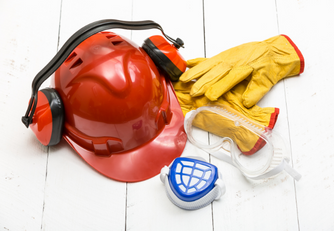
Personal protective equipment (PPE) protects employees from potential workplace hazards. According to the Occupational Safety and Health Administration (OSHA), PPE can reduce the risk of injuries by 90 percent. Proper fitting PPE can reduce exposure to hazardous substances and objects. Workplaces must provide employees with the appropriate clothing and equipment to protect them from the risk of injury.

Examples of Personal Protective Equipment

Commonly used PPE includes gloves, eye and face protection, hearing protection, and respiratory protection. Each type of PPE is designed to protect workers from specific hazards. For example, gloves protect hands from contact with sharp objects or chemicals, while face shields protect the face from flying debris or liquids.

Why is it important?

Noncompliance with PPE guidelines can result in a series of negative consequences. Avoid fatal injuries and exposure to hazardous materials by simply wearing proper protection and using safety equipment. Noncompliance with PPE guidelines can result in costly citations and fines for employers.

It is also essential that employees are adequately trained on how to use specific equipment. If not used properly, it can create new hazards. For example, suppose an employee is not sufficiently prepared to use a respirator. In that case, they may wear it incorrectly and end up inhaling more airborne contaminants than if they were wearing it properly. Improper PPE use can also lead to other injuries, such as slips, trips, and falls. Employees who do not comply with PPE requirements are putting themselves and their co-workers at risk.

Improving Company Culture with Proper Training

Employers play a vital role in protecting their employees by providing them with the proper training to use PPE safely.

  • A culture that values safety will go a long way in promoting effective compliance.
  • Employees who feel valued for safety are more likely to comply with a productive attitude.
  • Appropriately trained employees on how to use PPE are less likely to experience injuries.

Encourage employees to ask questions by creating a safe and comfortable work environment. Being able to value their feedback will ensure that all employees are productive and happy within the workplace. In addition, holding frequent training sessions will allow consistent communication between the employer and employees. Reduce the number of workplace fatalities by creating an open and safe culture.

Conclusion

At EMR Safety and Health, we are dedicated to equipping employers with the knowledge they need to teach PPE compliance within the workplace effectively. If you are interested in learning more, call us at 972-235-8330. Also to learn more about EMR Safety and Health, visit our website at www.emrsafetyandhealth.com.


A Quick, Easy Guide to Situational Awareness

A woman with situational Awareness

A Quick, Easy Guide to Situational Awareness

Situational awareness is one of the most underrated skills you can have in life. People with high situational awareness constantly process their surroundings and quickly identify threats and benefits in their vicinity. Processing and clearly comprehending information during emergencies could be the difference between life and death.

Different settings call for varying levels of situational awareness. The level of alertness you would display in the privacy of your own home is not the same level you would show walking down a lonely street at night. We color-code the different levels of situational awareness a human being displays – white being the lowest and red the highest.

  • White: This level of situational awareness is most people’s default setting. You are usually on code white at home, minding your business with locked doors. You are walking around, oblivious to any incoming threats. You are often in this state because you are preoccupied with something like taking a shower, scrolling through your phone, or being engrossed in a TV show or a movie.
  • Yellow: This is the next immediate level. The main difference between code white and code yellow is that the latter involves you scanning your environment for threats. Remember, although you are now aware of your surroundings, you are still on relatively low alert and not focusing on a particular threat. An example of this level would be glancing around before fetching a newspaper from your lawn.
  • Orange: At this level, your head is on a swivel. Your movements become more purposeful, and a hint of paranoia kicks in. You start taking precautions, e.g., locking your doors. Your heart rate picks up, your breathing gets shallower, and you get a rush of adrenaline. You are now scanning your environment for threats and focusing on them. A common orange level situation is walking through a poorly lit parking lot.
  • Red: It is a code red! You are officially on high alert. You probably feel jumpy because your fight or flight response is kicking in. If your mind seems scrambled, it is okay. At this point, rational thought becomes difficult. You even start to process stimuli differently. Common effects at this level include time distortion, tunnel vision and auditory exclusion. Despite these problems, people lock in on a threat and act upon it. A code red situation could be a threat chasing after you on your way home.

We advise our readers to consider these levels as gears on a car. In every situation we find ourselves in, there is an appropriate setting to which we dial our situational awareness. Learning to shift between those gears takes practice, but it is worth it.

Situational awareness rests on four pillars:

  • Observing – taking in threats
  • Orienting – adapting to a situation
  • Deciding – formulating a plan
  • Acting – following through with the plan

One habit that translates into good situational awareness is people-watching. People-watching and scanning your environment can reveal suspicious behavior. This is especially true if you know what you are looking for. For example, here are some signs that somebody could become a mass shooter:

  • Oversized or loose-fitting clothes
  • Clothes not appropriate for an event or the weather
  • Keeping hands in pockets or concealing hands
  • Repositioning a weapon (confirmation touch)
  • Small bulges near waist or hip
  • Undue attention to carried objects
  • Oversized torso or bulky jackets/vest
  • Favoring one side (strong side)
  • Blading (turning body to protect or conceal a weapon)
  • Nervousness, muttering
  • Tunnel vision or 1000-mile stare
  • Trouble communicating
  • Repeated entries and exits to an area

At EMR Safety and Health, we are dedicated to equipping everyday people with the knowledge they need to combat potential violence effectively. If you are interested in learning more, sign up for our Safety Compliance Awareness Trainer (S-CAT) – Active Shooter, Workplace Violence course, or visit us at www.emrsafetyandhealth.com.

Harassment is Workplace Violence

Harassment in workplace

Harassment is Workplace Violence

According to Statista, America’s civilian labor force is about 164 million people. That is a little under half the population. Given the sizable proportion of the public this accounts for, the topic of workplace violence is more salient than ever. Are Americans safe at work, and do they have a clear picture of what constitutes workplace violence? This blog will unpack a few common examples of workplace violence and what steps you can take to mitigate its effects on you and your coworkers.

Harassment

Many Americans believe that some physical altercation must occur in the workplace to be deemed “workplace violence”. Well, this could not be further from the truth. OSHA defines workplace violence as “any act or threat of physical violence, harassment, intimidation, or threatening disruptive behavior at the work site.”

Harassment in the workplace is prevalent across all industries. Harassment is unreasonable behavior that demeans, humiliates, or embarrasses someone. The Equal Employment Opportunity Commission expands upon this by deeming harassment as any “unwelcome verbal or physical behavior based on race, color, religion, gender/gender identity, age, etc.”

Workplace harassment violates Title VII of the Civil Rights Act of 1964 and other federal regulations. Harassment becomes unlawful when:

  • The conduct is severe enough that a reasonable person would consider the workplace intimidating, hostile or abusive
  • Enduring the conduct is a prerequisite to the victim’s continued employment

Sexual Harassment

Sexual harassment, like workplace harassment, violates Title VII of the Civil Rights Act of 1964. However, sexual harassment is deemed unlawful when it leads to sexual assault. According to a 2017 study by the Institute for Women’s Policy Research, the EEOC received 26,978 claims of workplace harassment – a quarter (6,696) of which were specifically sexual harassment claims.

According to the EEOC, there are two types of sexual harassment:

    1. Quid Pro Quo – this type of harassment occurs when sexual advances are demanded of an employee in exchange for an employment benefit, e.g., hiring, continued employment, promotions, pay raises, etc.
    2. Hostile Work Environment – this type of harassment occurs when an employee is subjected to one of the following:
    • Staring or leering
    • Dissemination of sexually explicit material via emails, letters, or notes
    • Display of sexually explicit material in the workplace
    • Jokes and offensive remarks

If the behavior worsens, sexual assault is in play. Unwarranted touching, patting, pinching or inappropriately brushing oneself against a victim all constitute ample grounds to file a sexual assault claim.

Sexual harassment’s adverse effects on a workplace cannot be overstated. For its victims, they deal with undue guilt, shame, and stress. Also, sexual harassment cripples an employees’ morale and productivity. Companies must have effective grievance measures to tackle these issues, and the resulting corrective actions must be stern and decisive.

Report and Documenting Your Claim

Before starting the claim process, we appeal to everyone enduring any form of workplace violence to address the perpetrator and demand that they stop immediately. If you have done this and seen no changed behavior – or you’re uncomfortable addressing the perp – you can go ahead.

Your next step is to report the incident to at least two different supervisors. In your report, make sure you include the following:

    • The date and time of the incident
    • The incident’s location
    • A detailed description of what happened
    • The person(s) involved, including witnesses
    • Any other information necessary to explain your concerns

We recommend that you timestamp all emails concerning your claims and that you send yourself a private copy of all your communications during the claim process. This ensures that even if your emails get deleted, you will not be left vulnerable. Make sure that your company follows its sexual harassment policy to the letter. If the perpetrator is a high-ranking official in your company, you can always reach out to someone higher up in the chain of command.

Conclusion

At EMR Safety and Health, we are dedicated to equipping everyday people with the knowledge they need to effectively understand and combat workplace violence. If you are interested in learning more sign up for our Active Shooter, Workplace Violence Online Event by clicking here or visit us at www.emrsafetyandhealth.com.
How to Act During an Active Shooter Situation

Active shooter

How to Act During an Active Shooter Situation

Gun violence has become rampant in the US, exposing innocent civilians to the risk of getting shot. 2021 saw the highest number of active shooter cases. Statistics from an FBI report show 61 active shooters with 103 casualties. The number is 97% higher than the 2017 incidences.

A lot of confusion and chaos ensues once a gun sound goes off in public. Panic and anxiety leave everyone scrambling for safety or reacting to the fear of anticipation. The body launches the flight, fight, or freeze mechanism to defend itself from external danger. A person can utilize this natural defense response to stay safe.

How can someone make the fight, flight, or freeze response work favorably during an active shooter situation?

Situational Awareness

According to the Department of Homeland Security, situational awareness is an essential skill to possess. Situational awareness is the ability to collect critical information about your environment to give you a chance to avoid harm or to see it coming. Situational awareness works in tandem with swift decision-making.

Observe the environment, make quick deliberations based on your assessment and do the following:

  • Identify exits – the first thing to do when entering a building is to note the nearest doorways leading out of the building.
  • Observe without staring at suspicious people or situations. Maintain a safe distance or leave the place if there are signs of danger.
  • Instincts are crucial – trust that uneasy feeling or gut instinct about a place, person, or situation.
  • Limit distractions by staying alert – do not let the disarray become a hindrance to acting.

Actions to Take

Once done with assessing the situation and surroundings, a person can use the information to protect themselves during an incident. Here are some examples:

  • Be in the moment – do not zone out. Notice the scale of the situation. Where the gunfire is coming from, where the commotion is heading.
  • Run to the nearest exit – if the coast is clear, stay out of harm’s way by evacuating to the closest way out. Call 911 once there is an assurance of safety.
  • Hide in an enclosed space – if the shooter is nearby, look for a place to hide. Stay in the office and lock the door.
  • Avoid hallways and open spaces.
  • Stay quiet and avoid movements while hiding out. Put your mobile phone on silent to avoid drawing attention to yourself.
  • If someone gets hurt in the active shooter incident, get them to a safe place first before offering help.
  • Self-care is essential to survive the ordeal. Keep a positive outlook while hiding. Keep hope alive until it is over.
  • Fight as a last resort. Disrupt and ambush the attacker only after assessing their armory. Recruit other strong civilians and use makeshift weapons to weaken the shooter’s defenses like a fire extinguisher, scissors, or chair. Be mentally prepared to cause harm to the attacker.
  • Once the incidence is over, seek professional counseling to overcome mental anguish from the ordeal.

What to do When the Police Arrive

Once the authorities arrive, listen and obey their instructions, as follows:

  • Maintain calmness and follow police instructions during an evacuation.
  • Place your hands in a visible location and keep them empty as the authorities assess the situation.
  • Provide any helpful information once the rescue mission is complete.

Contact Us

At EMR Safety and Health, we provide training to enable people to stay safe during an active shooter incident. Contact us at 800-595-6110 to find out more.


Why the Safety Compliance Awareness Trainer (S-CAT) Instructor Course for Active Shooters and Workplace Violence is Essential

Active shooter

Why the Safety Compliance Awareness Trainer (S-CAT) Instructor Course for Active Shooters and Workplace Violence is Essential

In recent times, acts of school and workplace violence involving active shooters have been on the rise across the USA. These occurrences not only threaten life, safety, and security, but they also undermine public confidence while emotionally destabilizing the communities affected. Teaching communities how to respond to active shooter workplace violence events helps build campus and workplace resilience by providing the skills necessary to prepare for and respond to violent incidents to minimize fatalities and injuries.

What is S-CAT Training – Active Shooter/Workplace Violence?

Safety Compliance Awareness Trainer (S-CAT) is an EMR Safety and Health instructor certification program. In the S-CAT Active Shooter/Workplace Violence instructor course students learn how to teach their students how to act and react in case of an active shooter or workplace violence situation. Students also learn how to teach the steps necessary to maintain a safe environment. Once certified, instructors can teach the class to organizations in their communities. All of the class materials necessary to teach the course are included.

Benefits of S-CAT Training for Active Shooter/Workplace Violence

No institution or organization is immune to the threat of an active shooter terrorizing a workplace. The source of threats and violence could be internal or external and can occur anywhere, at any time, and often with no justifiable reason. It is now evident that a proactive stance should be taken to prevent violence from occurring. This S-CAT course is designed to teach students how to prevent, prepare for and respond to workplace violence events. The following are some of the benefits:

Provide peace of mind: Students and employees are worried about becoming victims of active assailants in their environments. A recent study reveals most people believe they are ill-equipped to handle an active shooter or workplace violence event should it occur. Providing S-CAT training gives students and employees the knowledge, skills, and confidence they need when faced with an unthinkable situation.

Help prevent incidents: Providing active shooter and workplace training also helps prevent incidents. When communities learn to recognize the warning signs, they will act proactively by informing managers and authorities, thus helping to avoid a disaster.

Reduces financial and legal liabilities: There is no doubt an active shooter or workplace incident can quickly become overwhelming for an organization. Recent statistics reveal that the annual cost to businesses of workplace violence in the U.S. was $130 billion in 2018, which could be higher today. These costs are related to medical bills and the costs of counseling survivors. Companies will need to gather for lawsuits and out-of-court settlements should families take legal action. Active assailant readiness training can help lower the risks of these violent events from happening, thus reducing financial and legal liabilities.

Providing Critical Training to Communities

Due to these highly unpredictable occurrences, there is a huge demand for workplace violence training, all schools, businesses, and organizations must have a workplace violence awareness and response plan in place and offer adequate training to their communities, so they are ready to respond to any situation. This half-day course is for anyone who wants to teach work associates, teachers, friends, family, etc. how to act and react during an active shooter and/or workplace violence situation and how to maintain a safe environment. Click here to learn more about our S-CAT Active Shooter/Workplace Violence instructor course. Go to www.emrsafetyandhealth.com to see a full catalog of all of our S-CAT instructor courses, OSHA courses and American Heart Association courses.

American Heart Association Training

Hands typing on laptop

Anyone who is interested in becoming a part of the medical field, including allied health positions, should consider enhancing their knowledge with American Heart Association training. Here is more information regarding the American Heart Association Training courses that are available.

Basic Life Support (BLS) Training Course

The Basic Life Support course is available for blended learning and classroom training at EMR Safety and Health in Dallas, Texas. Each BLS training course teaches the same AHA science-based skills. Individuals who complete this course will receive an AHA BLS course completion card. The blended learning option features e-learning where students can complete part of the course at their own pace. The remaining part of this course is a hands-on skills session. The classroom format of the Basic Life Support course features an instructor-led, hands-on, classroom atmosphere. The BLS course is ideal for prehospital providers, including paramedics, EMTs, firefighters, and facility hospital providers. In this course, students will learn CPR for infants, children, and adults, the importance of the early use of an AED, and other basic life support essentials.

Advanced Cardiac Life Support (ACLS) Training Course

The ACLS training course enhances the foundations of basic life-saving skills while focusing on the importance of preventing cardiac arrest. This advanced cardiac life support training course reflects the education and science from the 2020 American Heart Association Guidelines for CPR and Emergency Cardiovascular Care (ECC). The ACLS training course is ideal for health care professionals who manage cardiovascular emergencies for personnel in an emergency. Students who enroll in this course will be able to define systems of care, model effective communication, perform early management of cardiac arrest in various situations, including resuscitation, transfer of care and other skills.

Pediatric Advanced Life Support (PALS) Training Course

The Pediatric Advanced Life Support Training Course is available in a blended learning setting online and classroom training. Students who complete this course will receive an AHA PALS Course Completion Card. The PALS training course is ideal for health care providers who respond to emergencies in children and infants, as well as personnel in emergency medicine, response, intensive care, and critical care units. This training course features clinical and realistic scenarios that encourage participation, hands-on class format and more. The Pediatric Advanced Life Support Training Course strives to improve the outcome of pediatric patients by teaching health care providers to recognize and intervene in situations that involve patients with shock, respiratory, and cardiopulmonary arrest emergencies.

These courses, along with many others, provide health care providers with enhanced knowledge of life-saving technology and advanced life-saving methods that improve a patient’s overall care and quality of life. Students who complete these courses can be more confident in their profession and the quality of care they provide. These American Heart Association Training courses are available online and at the Dallas, Texas, location for a traditional classroom learning experience.

Incident/Accident Investigation

Accident prevention

Most accidents are blamed on the employee’s behavior.  There are cases where this is true, but usually, this is not the case.  Causes of accidents run much deeper than employee behavior.   

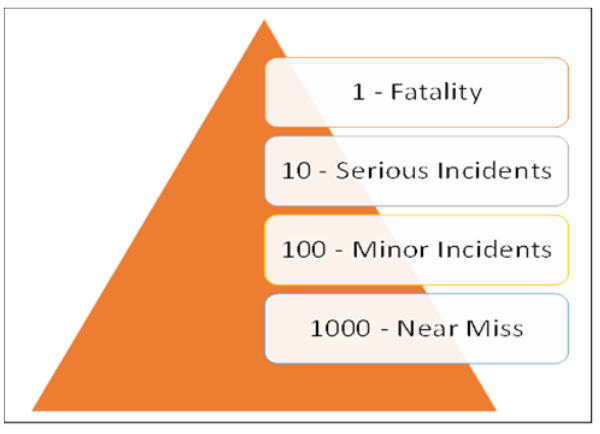
Every 1,000 near misses in the workplace is a practice for a minor incident.  Every 100 minor incidents in the workplace is a practice for the serious incident.  Every 10 serious incidents result ultimately in one fatality.  Every time we let a near miss go, without an investigation and correction, we are practicing for the fatalities.  Businesses need to address incidents at a preventive measure.   

diagram

Theories of the Cause of Accidents

Multiple Cause Theory uncovers root causes because accidents are not assumed to be simple events.  They are the result of a series of random related or unrelated acts/events that somehow interact to cause the accident.  This is a systems approach, which take into account the dynamics of systems that interact within the overall safety program.

The Domino Theory says that injury results from a series of related occurrences which lead to a final event, resulting in injury or illness.  Also referred to as a chain of related events.  It’s assumed that by eliminating any one action or event, the chain will be broken.

Single Event Theory is to blame the victim.  It’s simple right, Jim on one occasion reached into the machine without a tool. It’s convenient to blame the victim and all responsibility goes to him.  Blaming is a short-term fix, but in the long run blaming is expensive to implement and maintain.

Incident/Accident Steps to Investigation

    1. Get everyone safe
    2. Preserve and document scene
    3. Collect information
    4. Determine root causes
    5. Implement corrective actions

Information Analysis

After gathering all the information, conduct a structured analysis to determine the unique events that occurred.  Accurately determine the sequence of events and start by separating (breaking down) the incident into its component parts.  This is looking at pre-incident, during incident and post incident parts so that hazardous conditions, unsafe behaviors, and system weaknesses can be identified.

Sample Accident

EMS responds to an accident at your facility.  Mike was injured on August 1, 2020 in the power press shop area of the facility.  The accident occurred on a mechanical power press and Mike lost three fingers when he reached into the press to extract a part.  The press is operated by a foot pedal and it was not guarded.  The plexi-glass point of operation guard was left flipped up.  Mike was removing a tool stuck in the die and he hit the unguarded foot pedal.  Mike yelled for help and employees came running to his aid.  A supervisor arrived followed shortly by EMS first responders.  There was no emergency response team trained at the facility, but there was a first aid kit.

Example Sequence of Events

    1. Employee was hired and received orientation one week ago
    2. Maintenance removes a guard to work on press
    3. Maintenance does not have the needed part and is called away for another broken machine
    4. Maintenance fails to secure guard or post a “Do Not Use” sign
    5. Tool jams in press
    6. Employee fails to lock out the press before clearing the jam
    7. Employee bypasses unsecured guard
    8. Employee reaches into press without a hand tool
    9. Employee steps on unguarded foot pedal activating press
    10. Press dies closes on employee’s hand amputating three fingers (the injury incident)
    11. Supervisor and 911 are called
    12. Supervisor shows up with first aid kit
    13. 911 medics provide treatment at scene
    14. 911 medics transport employee to hospital

Causes of Accidents

Look below the Direct Cause of the amputation injury.  We must look at the Indirect Causes (behaviors and conditions) that led to the injury.  Conditions would include unguarded machine, broken tools or equipment, defective PPE or an untrained worker. Behaviors would include ignoring a hazard, failure to enforce or inspect, failure to train.   The Basic Root Cause of accidents pre-exist indirect and includes; inadequate training, no discipline or procedures, no orientation process, inadequate training, no inspections that recognize hazards, no labeling or signage to warn employees.

Injury Analysis

    1. Injury Analysis – amputation of three fingers caused by caught in, dies of press.
    2. Indirect Cause Analysis – hazardous conditions, foot pedal unguarded, and unsafe employee/manager/maintenance behaviors, employee bypasses unsecured guard, employee failed to lockout tagout, employee reaching unguarded die without hand tool and maintenance failed to secure guard
    3. Basic Root or Systems Analysis – press operator not trained, maintenance man had too much work and was in hurry, press operated working too fast, supervisor too busy, supervisor not conducting safety inspections of area and failed to train press operator.

OSHA’s View on Controlling Hazards

diagram

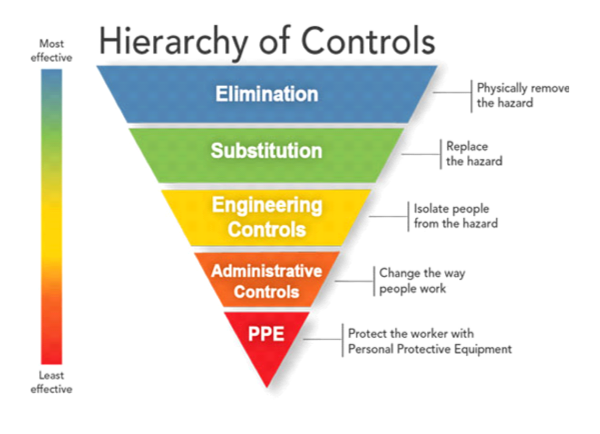
Employers must control hazards in the workplace and keep employees safe from harm.  The intention of the OSHA standards is that they are minimum requirements.  If a specific rule cannot be sited, the General Duty Clause says,  “employment and a place of employment which are free from recognized hazards that are causing or are likely to cause death or serious physical harm to his employees…”

What is a Competent Person?

what is a competent person min

What is a Competent Person?

“Competent Person” has:

    1. The knowledge to recognize a hazard, and
    2. The authority to correct it

Industries Requiring Competent Person Training

In the OSHA regulations, there are three big sections that necessitate a Competent Person:

    1. Fall Protection
    2. Excavations

Competent Person Training

Generally, these classes are twenty-four hours long, but taking the class is not enough.  How does taking a class make you competent?  Training will provide the knowledge, but who really knows you?  What are your capabilities and how do you apply what you learn?

Your employer must understand what you learned and understand how you performed on the course examination.  Employers must observe how you demonstrate your learning of recognizing and correcting hazards.  How do you handle others?  Are you respected by your peers and coworkers?  The employer looks at you from a liability standpoint and evaluates the risk.  So ultimately, the employer deems you competent and gives the authority to stop work and correct hazards in the workplace.

You can find competent person training here.

OSHA and the Competent Person

OSHA will ask for the Competent Person on job sites. They want to know:

    • If your employees know who the Competent Person is, and
    • To evaluate their knowledge and level of authority


OSHA could cite you if you do not have a competent person, or if your Competent Person is found lacking knowledge and information. It is important for the employer to select the right person for this role.  Competent Person’s must understand the responsibilities that come with the role. Title cannot be a haphazard appointment.

Competent Person Training

Competent Person” classes designed to present a higher level of education than your standard training classes.  It provides the information necessary to qualify somebody for this title. Employers must establish an assessment period for a new Competent Person and evaluate their ability. Once you are comfortable with your new Competent Person, give them the authority to operate and introduce them to the employees.  Employees need to know who to turn to with a question or concern.

Fire Safety Plans

Fire Safety

Training workers about fire hazards in the workplace and what to do in a fire emergency is required. If you expect your workers to use firefighting equipment, you should give them appropriate equipment and train them to use the equipment safely.  These requirements are found in 29 CFR Part 1910 Subparts E and L; and Part 1926 Subparts C and F.)

Emergency Fire Exits

Every workplace must have enough exits located to enable quick evacuation. Consider the type of structure, the number of persons exposed, the fire protection available, the type of industry, the height of the building and type of construction of the building or structure.

Fire doors must not be blocked or locked when employees are inside. Delayed opening of fire doors, however, is permitted when an approved alarm system is integrated into the fire door design. Exit routes from buildings must be free of obstructions and properly marked with exit signs. See 29 CFR Part 1910.36 for details about all requirements.

Requirements for Portable Fire Extinguishers

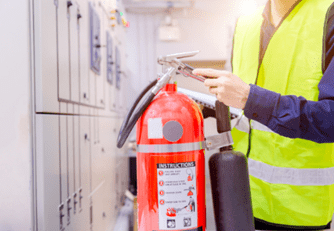
OSHA does not absolutely require portable fire extinguishers, but Life, Health and Safety Code do require them.  However, if you expect your workers to use portable fire extinguishers, you must provide hands-on training in using this equipment. See 29 CFR Part 1910 Subpart L.

Emergency Action Plans

When required, employers must develop emergency action plans that:

      • Describe the routes for workers to use and procedures to follow.
      • Account for all evacuated employees.
      • Remain available for employee review.
      • Include procedures for evacuating disabled employees.
      • Address evacuation of employees who stay behind to shut down critical plant equipment.
      • Include preferred means of alerting employees to a fire emergency.
      • Provide for an employee alarm system throughout the workplace.
      • Require an alarm system that includes voice communication or sound signals such as bells, whistles, or horns.
      • Make the evacuation signal known to employees.
      • Ensure emergency training.
      • Require employer review of the plan with new employees and with all employees whenever the plan is changed.

Not every employer is required to have an emergency action plan. OSHA standards that require such plans include the following:

      • Process Safety Management of Highly Hazardous Chemicals, 1910.119
      • Fixed Extinguishing Systems, General,1910.160
      • Fire Detection Systems, 1910.164
      • Grain Handling, 1910.272
      • Ethylene Oxide, 1910.1047
      • Methylenedianiline, 1910.1050
      • 1,3 Butadiene, 1910.1051

Fire Prevention Plans

OSHA standards that require fire prevention plans include the following:

      • Ethylene Oxide, 1910.1047
      • Methylenedianiline, 1910.1050
      • 1,3 Butadiene, 1910.1051

Employers covered by these standards must implement plans to minimize the frequency of evacuations. All fire prevention plans must:

        • Be available for employee review.
        • Include housekeeping procedures for storage and cleanup of flammable materials and flammable waste.
        • Address handling and packaging of flammable waste. (Recycling of flammable waste such as paper is encouraged)
      • Cover procedures for controlling workplace ignition sources such as smoking, welding, and burning.
      • Provide for proper cleaning and maintenance of heat producing equipment such as burners, heat exchangers, boilers, ovens, stoves, and fryers and require storage of flammables away from this equipment.
      • Inform workers of the potential fire hazards of their jobs and plan procedures.
      • Require plan review with all new employees and with all employees whenever the plan is changed.

Fixed Fire Extinguishing Systems

Fixed extinguishing systems throughout the workplace are among the most reliable firefighting tools. These systems detect fires, sound an alarm, and send water to the fire and heat. To meet OSHA standards employers who have these systems must:

      • Substitute (temporarily) a fire watch of trained employees to respond to fire emergencies when a fire suppression system is out of service.
      • Ensure that the watch is included in the fire prevention plan and the emergency action plan.
      • Post signs for systems that use agents (e.g., carbon dioxide, Halon 1211, etc.) posing a serious health hazard.

Disaster Cleanup and Recovery

Disaster Cleanup Relief 

Disasters cause widespread flooding and property damage that expose employees to hazards during cleanup and recovery. Employers sending employees into Disaster Cleanup Area’s to do recovery have a responsibility, according to OSHA, to train employees appropriately and provide personal protective equipment.

Contaminated Floodwaters

The mold and fungi in the air employees breathe have the potential to make them sick. Bacteria and other infectious organisms (from sewage) in water and soil as well as toxic substances from flooded industrial and waste sites pose big hazards.

    • Employers must ventilate enclosed spaces with fresh air.
    • Assume that floodwater is contaminated unless proven otherwise.
    • Allow only trained workers with the proper personal protective equipment to clean up toxic chemicals, other hazardous waste, and mold.
    • Employees must be up-to-date with a tetanus shot (within the last 10 years).
    • Discarding water-damaged and visibly contaminated materials while wearing waterproof boots, latex or rubber gloves and other protective clothing.
    • Employers must consider using special chemical-resistant outer clothing and protective goggles in some cases depending on the hazard.
    • Issue N-95 NIOSH-approved disposable respirator, at a minimum, when handling mold-contaminated materials and this respirator requires medical evaluations and fit test prior to use.
    • Employers must keep an adequate supply of clean water available for drinking and washing.

Downed Power Lines

Burns and electrocution from contact with energized lines or objects, including tree limbs, in contact with downed power lines.

    • Establish and clearly mark a danger zone around all downed power lines
    • Stay at least 10 feet from all downed lines
    • Assume that all power lines are live or energized
    • Allow only trained and equipped workers to repair electrical wires

Tree Trimming and Debris Removal

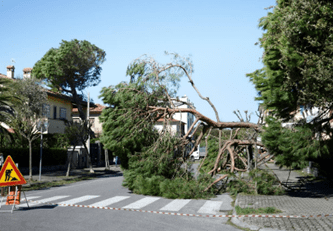
Electrocution is not the only hazard as being struck or crushed by falling trees and limbs can cause severe injury or death.

Employers must:

    • Contact utility companies and request they de-energize and ground or shield power lines.
    • Require all tree trimming and removal with 10 feet of a power line must be performed by trained tree trimmers
    • Establish and clearly mark danger zones where tree debris may fall onto workers
    • Protect employees from injuries from equipment from lifting or moving tree limbs and other debris
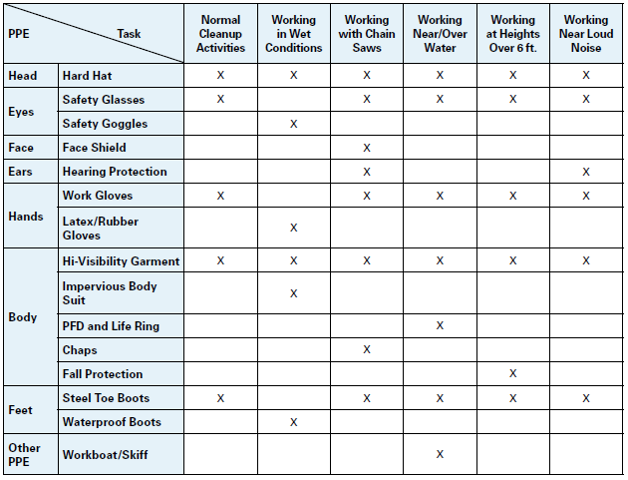
    • Provide employees with work personal protective equipment (PPE) such as gloves, hard hats, boots, hearing protection and eye/face protection. Chaps should be provided when using a chainsaw.
    • Train Employees on chainsaw’s require employees to watch for kickback and not cutting with the saw tip
    • Training on not getting to close to chippers as well as, not reaching into a chipper
    • Provide mechanical equipment to lift heavy objects or provide extra people and training in proper lifting techniques

Falls

Falls from aerial lifts, ladders, roofs and other elevated work surfaces can be hazards for employees. Slippery and uneven working surfaces that can create injuries due to slips.

Employers must provide the following protective measures:

    • Use safe procedures to prevent aerial lift tip-overs
    • Provide employees with body harness or restraint belt with a lanyard attached to the boom or basket of the lift
    • Use proper ladder safety (set on firm and stable ground, maintain “three-point” contact, do not stand on top rung)
    • Be aware of wet or slippery surfaces, obstacles, or uneven surfaces on the site

Portable Generators

Shocks and electrocution from gas and diesel powered generators, as well as toxic carbon monoxide (CO) from generator exhaust are hazards as disaster recovery sites. Fires from improper refueling and fuel storage are also problems.

Employers must:

    • Never run a portable generator inside a house or enclosed space
    • Inspect electric cords to ensure they are in good working condition and free of any defects
    • Use a ground-fault circuit interrupter (GFCI)
    • Ensure that spaces where generators are used are properly ventilated
    • Shut down the generator before refueling
    • Never store fuel or the generators indoors

Work Zones

Transportation incidents (injuries and deaths) in work zones where workers are struck by moving vehicles and mobile equipment.

Employers must use the following preventive measures:

    • Wear high-visibility clothing and headwear compliant with ANSI/ISEA 107-2004
    • Use proper traffic controls (Signs, cons, barriers)
    • Use proper lighting, flaggers, and worksite communications
    • Make sure that vehicle operators are properly trained
    • Always use seat belts and rollover protection


table

Construction Activities

Exposure to asbestos contaminated materials during the demolition of building and structures has a high probability at disaster sites. Spaces with limited access, suffocation hazards, or confined spaces can be confronted. Employees can be exposed to trenching and excavation accidents such as cave-ins. An employee is at risk for back, knee and shoulder injuries from manual lifting and handling of building materials and fallen trees.

Employers must:

    • Properly select and require the use of PPE which may include respiratory protection
    • Do not allow employees to enter permit-required confined spaces with training an a permit to enter
    • Prevent cave-ins by benching, sloping, shoring, or shielding the soil
    • Require the use of proper lifting techniques and teams of two or more to move bulky or heavy items